
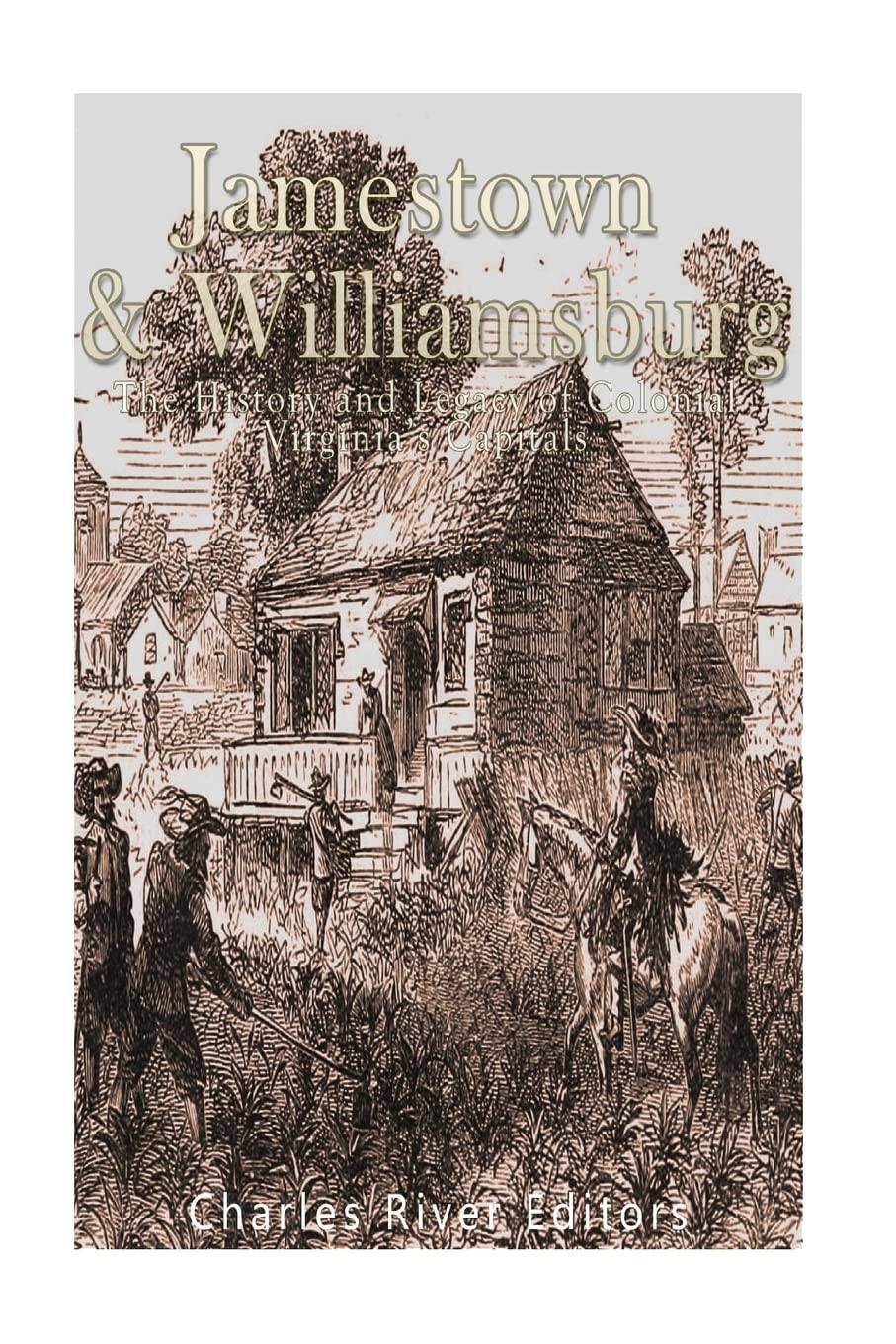
Jamestown and Williamsburg: The History and Legacy of Colonial Virginia’s Capitals
Produktdetails
| Artikelnummer | 237284467 | Erscheinungsdatum | 2026/07/10 | Listenpreis | €3.58 | Modellnummer | 237284467 | ||
|---|---|---|---|---|---|---|---|---|---|
| Kategorie | |||||||||
*Includes pictures *Includes excerpts of contemporary accounts from colonists *Includes online resources and a bibliography for further reading John Smith is one of the most common names in the English language and akin to the use of John Doe, but every Briton and American is familiar with the explorer and mercenary Captain John Smith, who helped found the first permanent English colony in the New World at Jamestown in 1607. Jamestown is fondly remembered today for being the first permanent English settlement in the colonies, but it was not fondly remembered by those who lived and died there. The English quickly learned it would be difficult to establish a permanent settlement because of the poor weather, the swampy terrain, the hostile natives living nearby, and the general inexperience and ineptitude of the English settlers. During their first winter, everyone nearly starved, and more than half of the settlers died. By the end of the winter of 1609-1610, known as the “starving time”, barely 10% of the settlers were still alive. Nevertheless, Jamestown is remembered today because the settlement did survive through the hardships and go on to serve as the capital of the English colony for much of the 17th century. At the same time, one of the biggest reasons for its survival and fame today can be attributed to the local Native Americans, particularly Pocahontas, who has added both a human and romanticized, mythological element to Jamestown. She was the daughter of the paramount chief (mamanatowick) Powhatan, leader of an Algonquian-speaking native group in eastern Virginia. It was this group that Smith and the other English settlers came into contact with, and Smith credited her with saving him from being killed by the Native Americans. After that, Smith was able to establish relatively friendly relations and trade with the local inhabitants, ensuring Jamestown’s survival. As such, Jamestown has often been cast as the backdrop of this unique relationship, one that the colonists sought to portray as representative of relations with Native Americans. Along with Jamestown and Yorktown, Colonial Williamsburg is known today as part of the Historic Triangle of Virginia, but all three of these old Virginian sites are known for vastly different reasons. While Yorktown was the scene of the final climactic battle of the American Revolution and Jamestown is remembered for being the first English settlement to survive in Virginia, Colonial Williamsburg is now best known as a bridge to the past. Williamsburg got its start as a fortified site, which was vitally necessary for English settlers to heavily outnumbered by nearby Native Americans, many of which were at times hostile. Known originally as Middle Plantation, the site served as the capital of the colony for much of the 18th century, and it bore witness to seminal events in the history of Revolutionary era America, including the Gunpowder Incident, which nearly coincided with the Battles of Lexington and Concord to the north. However, once the capital was again moved, Williamsburg lost much of its prominence, and by the end of the 19th century it was best known for hosting the College of William and Mary. As fate would have it, a major initiative during the 20th century would restore Williamsburg to a place of prominence, literally. In one of America’s most ambitious building projects, efforts were undertaken to reconstruct the main parts of Colonial Williamsburg and restore it to a more original appearance, whether it was constructing new buildings with the old architecture or renovating colonial buildings. In doing so, Williamsburg was transformed from a sleepy (albeit historic) town into the biggest tourist destination in Virginia, and America’s most famous living-history museums. In the 20th century, it was used to teach students about American history and even current events, and it is now a place full of exhibits. Read more
| ISBN10 | 1539747859 |
|---|---|
| ISBN13 | 978-1539747857 |
| Language | English |
| Publisher | CreateSpace Independent Publishing Platform |
| Dimensions | 6 x 0.23 x 9 inches |
| Item Weight | 5.1 ounces |
| Print length | 100 pages |
| Publication date | October 26, 2016 |
Korrektur der Produktinformationen
Wenn Sie Unvollständigkeiten oder Fehler in den Produktinformationen auf dieser Seite bemerken, nutzen Sie bitte das Korrekturformular unten.
Korrekturanfrage